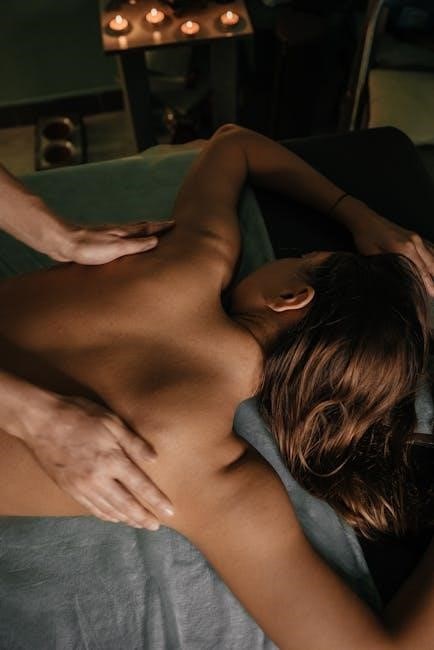
Discover a comprehensive guide to delivering relaxing and effective back massages, blending professional techniques from therapists globally. This compilation offers a step-by-step tutorial, perfect for beginners and those seeking advanced skills.
Benefits of Back Massage
Back massage offers a wealth of advantages, extending beyond simple relaxation. It’s a powerful tool for stress reduction, easing muscle tension and promoting a sense of calm. Regular sessions can significantly improve posture, counteracting the effects of prolonged sitting or poor body mechanics.
Furthermore, massage stimulates blood circulation, delivering vital oxygen and nutrients to muscles, aiding in recovery and reducing pain. Techniques detailed in comprehensive guides, like those available as PDFs, can target specific pressure points to alleviate discomfort and enhance mobility. This holistic approach contributes to overall well-being, fostering both physical and mental health. It’s a proactive step towards a healthier, more balanced lifestyle, easily accessible for self-care or professional application.
Contraindications for Back Massage
While incredibly beneficial, back massage isn’t suitable for everyone. Certain conditions necessitate caution or complete avoidance. Individuals with acute inflammation, fever, or contagious skin diseases should refrain from massage. Pre-existing medical conditions like blood clots, osteoporosis, or recent surgeries require a physician’s clearance before treatment.
Additionally, pregnancy demands specialized techniques and a qualified practitioner. Avoid massaging areas with open wounds, varicose veins, or cancerous growths. Comprehensive guides, including PDF resources on back massage techniques, often emphasize the importance of client screening; Prioritizing safety and understanding contraindications ensures a responsible and therapeutic experience, preventing potential harm and maximizing benefits for the recipient.
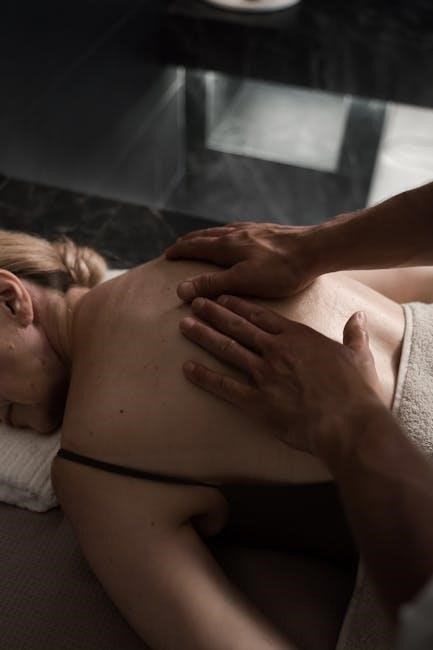
Preparing for a Back Massage
Ensure a calming atmosphere and client comfort are paramount before beginning; detailed PDF guides highlight the importance of setup for optimal relaxation and effectiveness.
Creating a Relaxing Environment

Establishing a tranquil setting is crucial for a successful back massage experience. Dim lighting, soft music, and a comfortable room temperature significantly enhance relaxation. Consider using aromatherapy with carefully selected essential oils – resources like detailed back massage technique PDFs often suggest blends for specific needs.
Minimize distractions by silencing phones and ensuring privacy. A clean and organized space contributes to a sense of calm. Prepare all necessary materials beforehand, including towels, oils, and a comfortable massage surface. The goal is to create a sanctuary where the recipient can fully unwind and release tension, maximizing the benefits of the massage techniques learned from comprehensive guides.
Essential Oils for Back Massage
Enhance the therapeutic benefits of your back massage with carefully chosen essential oils. Lavender is renowned for its calming properties, promoting relaxation and reducing stress. Eucalyptus can help soothe muscle aches and pains, often detailed in back massage technique PDFs. Peppermint offers a cooling sensation, easing tension and invigorating tired muscles.
Always dilute essential oils with a carrier oil, such as sweet almond or jojoba, to avoid skin irritation. Resources detailing massage techniques frequently recommend specific dilution ratios. Consider the recipient’s preferences and any allergies before application. Experiment with blends to create a personalized aromatherapy experience, complementing the massage and deepening relaxation.
Client Positioning and Drapping
Proper client positioning is crucial for both comfort and effective massage delivery, often illustrated in detailed back massage technique PDFs. The client should lie prone, ideally on a dedicated massage table with a face cradle. Ensure their body is aligned and supported with pillows under the ankles if needed.
Draping with clean towels or sheets is essential for maintaining modesty and warmth. Only the area being massaged should be exposed. This practice fosters trust and relaxation. Many instructional PDFs emphasize the importance of secure draping techniques. Communicate clearly with the client throughout the process, ensuring their comfort and adjusting positioning as necessary.
Effleurage Techniques
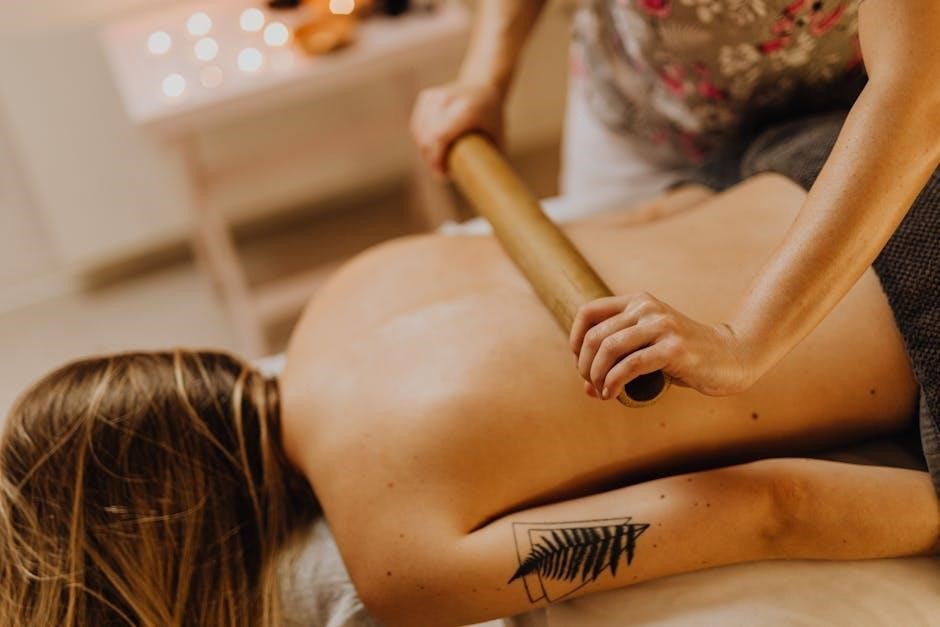
Effleurage, a foundational stroke, utilizes gliding movements to warm tissues and prepare the back for deeper work, as detailed in back massage technique PDFs.
Longitudinal Effleurage
Longitudinal effleurage involves long, flowing strokes that travel the length of the spine, from the sacrum to the shoulders, and back again. This technique, frequently illustrated in back massage technique PDFs, aims to warm the muscles and prepare them for deeper manipulation.
Maintain a consistent rhythm and pressure, using the palms of your hands. Begin with light pressure, gradually increasing it as the muscles relax. Ensure your hands remain in contact with the back throughout the stroke, avoiding abrupt starts or stops. Visualize smoothing the muscles along the spine, promoting circulation and easing tension.
Repeat these strokes several times, varying the pressure and speed to assess the client’s response and tailor the massage accordingly. Proper execution, as demonstrated in instructional guides, is key to achieving optimal relaxation and therapeutic benefits.
Transverse Effleurage
Transverse effleurage utilizes strokes that move across the width of the back, perpendicular to the spine. Often detailed in back massage technique PDFs, this technique complements longitudinal effleurage by working the muscles laterally. Employ the palms of your hands, applying even pressure as you glide across the back, from one side to the other.
Focus on covering the entire muscle mass, including the trapezius, latissimus dorsi, and rhomboids. Vary the pressure and speed to assess muscle tension and client comfort. This method helps to broaden the massage effect and address muscle imbalances.
Smooth transitions between strokes are crucial for maintaining a relaxing flow. Instructional materials emphasize consistent contact and rhythmic movements for optimal results.
Petrissage Techniques
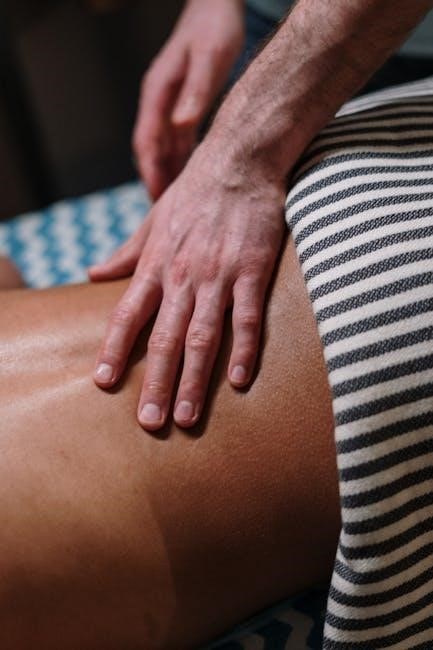
Petrissage involves kneading, wringing, and skin rolling – techniques often detailed in back massage PDFs – to lift and manipulate muscles, enhancing circulation and flexibility.
Kneading
Kneading, a fundamental petrissage technique frequently illustrated in back massage technique PDFs, mimics the action of dough being kneaded. This involves lifting, squeezing, and releasing muscle tissue with the hands. Begin with a gentle grasp, then rhythmically compress and release along the length of the back muscles.
Focus on larger muscle groups like the latissimus dorsi and trapezius. Vary the pressure according to the client’s comfort and tolerance, always communicating to ensure a relaxing experience. Proper kneading helps to loosen tight muscles, improve circulation, and release tension. Many instructional PDFs emphasize alternating hands for a continuous, flowing motion, maximizing the therapeutic benefits and minimizing fatigue for the practitioner.
Wringing
Wringing, detailed in many back massage technique PDFs, is a more advanced petrissage technique involving a twisting, squeezing motion. It’s performed by grasping the muscle tissue with both hands and alternately squeezing and releasing, as if wringing out a cloth. This technique effectively works deeper layers of muscle, releasing knots and adhesions.
Begin with a firm but comfortable grip, and move slowly along the back, focusing on areas of tension. Instructional PDFs often highlight the importance of maintaining a consistent rhythm and pressure. Wringing is particularly effective for the larger back muscles, promoting circulation and relieving deep-seated muscle soreness. Remember to communicate with the client regarding pressure levels throughout the process.
Skin Rolling
Skin rolling, frequently illustrated in back massage technique PDFs, is a gentle yet effective petrissage technique. It involves lifting the skin and subcutaneous tissue away from the underlying muscle, then rolling it between your fingers and thumb. This technique addresses superficial fascia restrictions and improves lymphatic drainage.
Many guides emphasize starting with a light grasp and gradually increasing pressure as the client tolerates. Work systematically across the back, covering the entire area. PDFs often demonstrate proper hand positioning to avoid discomfort. Skin rolling is excellent for releasing tension held in the superficial layers, enhancing overall relaxation and improving skin elasticity. Consistent, rhythmic movements are key to achieving optimal results.
Friction Techniques
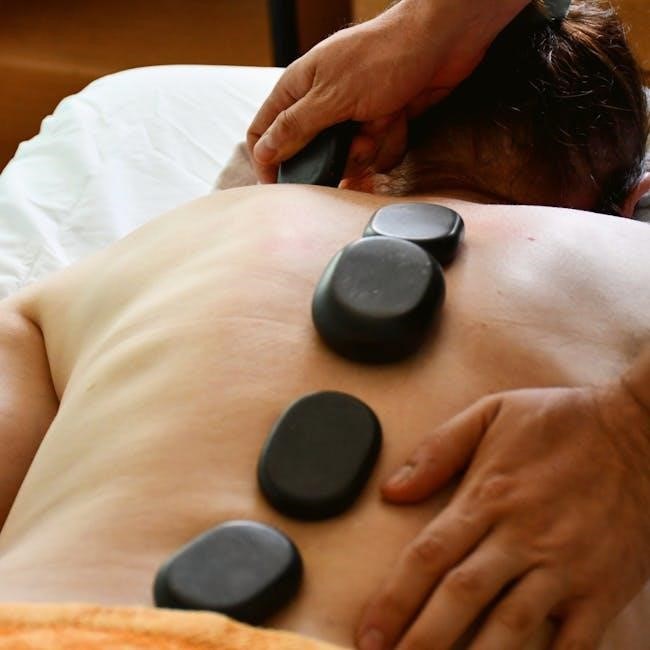
Friction, detailed in back massage PDFs, breaks down adhesions and increases blood flow using deep, circular or cross-fiber movements for targeted relief.
Circular Friction
Circular friction, as illustrated in many back massage technique PDFs, is a focused technique employing small, circular movements with the fingertips or thumbs. This method is exceptionally effective at addressing localized areas of muscle tension and breaking down minor adhesions within the tissue. The pressure should be firm but comfortable for the client, gradually increasing as the muscles relax.
When performing circular friction, maintain consistent contact with the skin, avoiding dragging or lifting. Focus on working directly over the muscle fibers, systematically covering the targeted area. This technique is particularly beneficial for addressing knots or trigger points, helping to release tension and restore normal muscle function. Back massage PDFs often emphasize the importance of slow, deliberate movements for optimal results.
Cross-Fiber Friction
Cross-fiber friction, detailed in numerous back massage technique PDFs, involves applying pressure perpendicularly across the muscle fibers. Unlike circular friction, this technique utilizes a transverse motion, effectively disrupting adhesions and stimulating tissue healing. It’s particularly useful for addressing chronic muscle pain and scar tissue resulting from injuries.
When executing cross-fiber friction, maintain a firm, controlled pressure, moving slowly and deliberately across the muscle fibers. Clients may experience some discomfort, but it should remain within their tolerance level. Back massage PDFs often highlight the importance of proper body mechanics to avoid strain on the therapist’s hands. This technique is best applied to specific areas of tension, not the entire back.
Tapotement Techniques
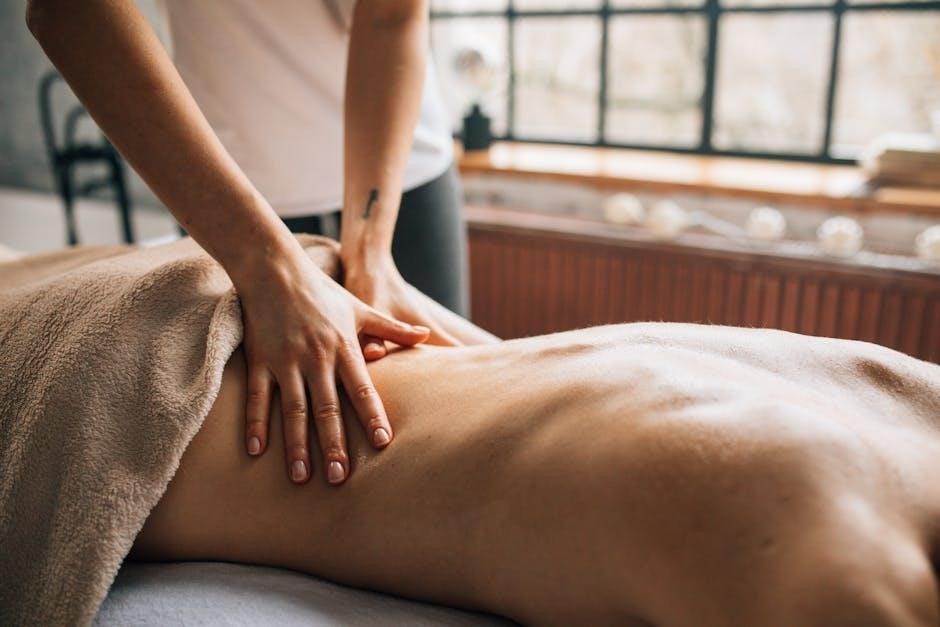
Tapotement, explored in back massage technique PDFs, employs rhythmic striking movements – hacking, cupping, and pounding – to stimulate muscles and invigorate the back.
Hacking
Hacking, a dynamic tapotement technique detailed in many back massage technique PDFs, involves using the edges of the hands – forming a ‘chopping’ motion – to rhythmically strike the back muscles. This technique is performed with relaxed hands and wrists, ensuring the movement originates from the forearms, not just the hands themselves.
The hands alternate, moving rapidly and lightly across the back, covering a broad surface area. Hacking is excellent for stimulating circulation, warming up muscles, and invigorating the nervous system. It’s crucial to avoid striking directly over the spine or kidneys. PDF guides often emphasize maintaining a consistent rhythm and adjusting the pressure based on the client’s tolerance and needs. Proper execution, as illustrated in instructional PDFs, maximizes its therapeutic benefits.
Cupping
Cupping, a tapotement technique frequently illustrated in back massage technique PDFs, involves shaping the hands into a hollow cup-like form. These ‘cups’ are then applied to the back with a quick, slapping motion, creating a rebounding effect as the hands are lifted. This action generates a hollow sound and stimulates the underlying tissues.
PDF guides emphasize keeping the hands relaxed and the movement rhythmic. Cupping is beneficial for loosening muscles, promoting circulation, and relieving tension. It’s particularly effective on larger muscle groups like the latissimus dorsi. Like other tapotement methods, avoid direct pressure on the spine. Detailed PDFs often showcase variations in hand position and speed to tailor the technique to individual client needs and preferences.
Pounding
Pounding, a dynamic tapotement technique detailed in many back massage technique PDFs, utilizes a loose fist or the edge of the hand to deliver rhythmic, percussive strokes. The hands are lifted and brought down with varying degrees of force, creating a stimulating sensation. PDF guides stress maintaining relaxed wrists and arms to avoid strain.
This technique aims to invigorate muscles and nerves, improving circulation and relieving muscle fatigue. It’s often applied to the larger back muscles, avoiding bony prominences and the spinal column. Illustrations in PDFs demonstrate proper hand positioning and movement patterns. Pounding is frequently combined with other tapotement methods for a comprehensive and energizing massage experience.
Advanced Back Massage Techniques
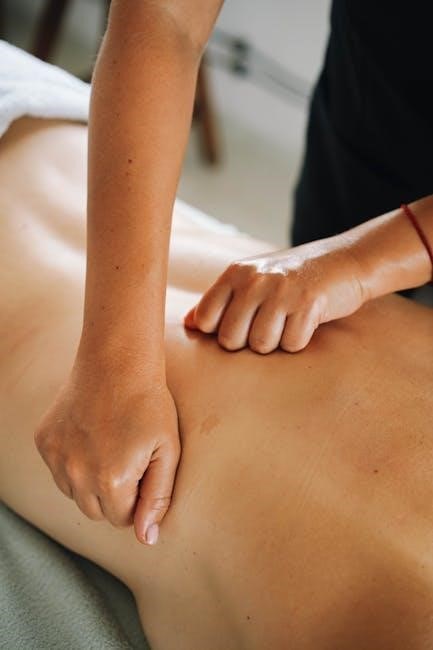
Explore specialized methods like trigger point therapy and myofascial release, often detailed in back massage technique PDFs, for deeper tension relief and improved mobility.
Trigger Point Therapy
Trigger point therapy focuses on identifying and releasing hyperirritable spots within skeletal muscles, often referred to as “knots.” These points can cause localized pain or referred pain in other areas. A back massage techniques PDF will often dedicate a section to locating these sensitive areas through palpation – carefully feeling the muscle for taught bands and nodules.
Once identified, sustained pressure is applied to the trigger point, initially causing discomfort, which gradually subsides as the muscle releases. Techniques range from static pressure to slow, circular movements. Effective trigger point work requires a good understanding of anatomy and pain patterns. Many resources, including detailed PDFs, emphasize the importance of client communication to gauge pain levels and ensure a comfortable, yet effective, treatment. This advanced technique can significantly alleviate chronic back pain and muscle tension.
Myofascial Release
Myofascial release addresses restrictions within the fascia – the connective tissue network surrounding muscles. A back massage techniques PDF will illustrate how fascial restrictions can contribute to pain and limited movement. Unlike focusing on individual muscle knots, this technique treats the interconnected web of tissue.
Therapists use slow, sustained pressure to lengthen and release the fascia, restoring its natural flexibility. The pressure is applied until a “release” is felt, often described as a softening or yielding of the tissue. Many PDFs highlight the importance of a holistic approach, recognizing that restrictions in one area can affect the entire body. Learning proper hand positioning and pressure application, as detailed in instructional guides, is crucial for effective myofascial release and improved postural alignment.
Post-Massage Care
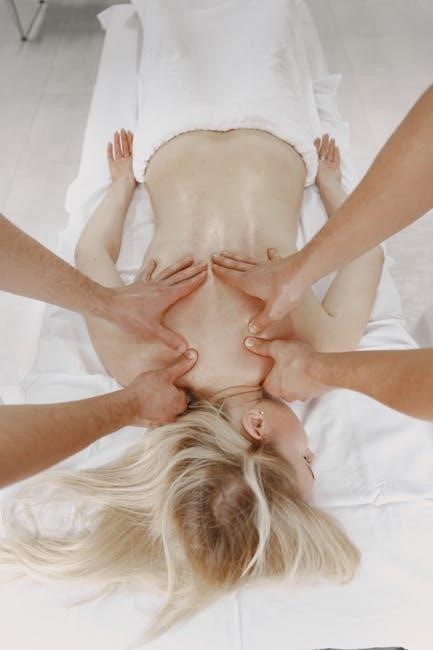
Ensure continued benefits with hydration and gentle stretching post-massage; a back massage techniques PDF details managing potential soreness and optimizing recovery for lasting relief.
Hydration and Stretching
Following a back massage, replenishing fluids is crucial; water helps flush out toxins released during the session, aiding muscle recovery and overall well-being. Aim for at least eight glasses of water throughout the day to maximize these benefits. Gentle stretching further enhances the positive effects, improving flexibility and reducing any lingering tension.
A back massage techniques PDF often emphasizes the importance of specific stretches, such as cat-cow pose or gentle spinal twists. These movements help maintain the increased range of motion achieved during the massage. Avoid strenuous activity immediately after, allowing your muscles time to adjust and rebuild. Consistent hydration and mindful stretching will prolong the relaxation and therapeutic advantages of your back massage experience, promoting long-term comfort and mobility.
Potential Soreness and Management
It’s common to experience mild soreness after a back massage, particularly if you have tight muscles or haven’t had a massage recently. This is a normal response as muscles adjust and release tension – often described as a “good ache.” A back massage techniques PDF will likely advise applying gentle heat, like a warm compress or bath, to soothe any discomfort.
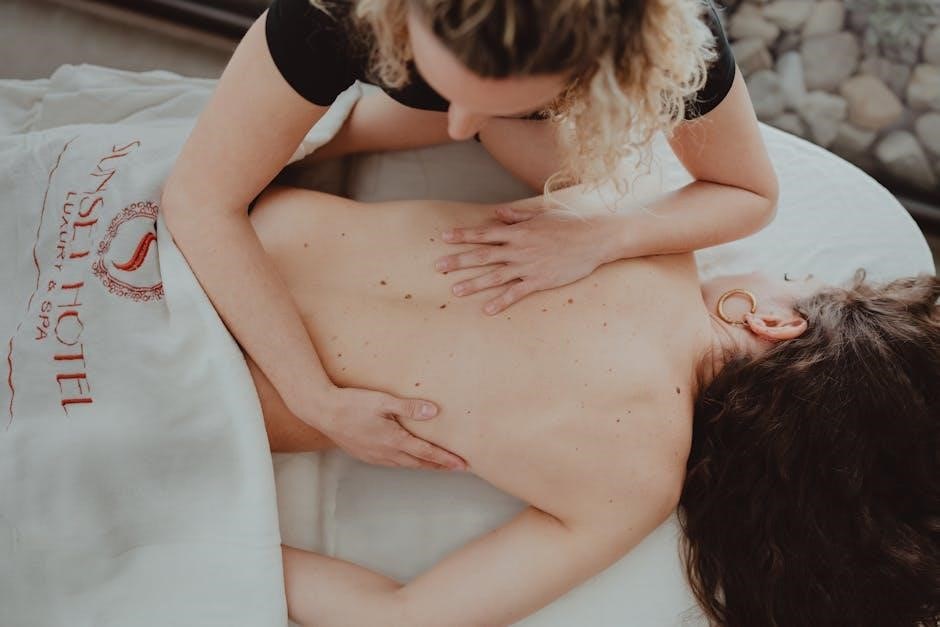
Over-the-counter pain relievers can also provide relief if needed, but are usually unnecessary. Avoid strenuous activity for 24 hours to allow your muscles to recover fully. If soreness persists beyond 48 hours or becomes severe, consult a healthcare professional. Remember, proper hydration and gentle stretching, as detailed in many guides, can significantly minimize post-massage discomfort.