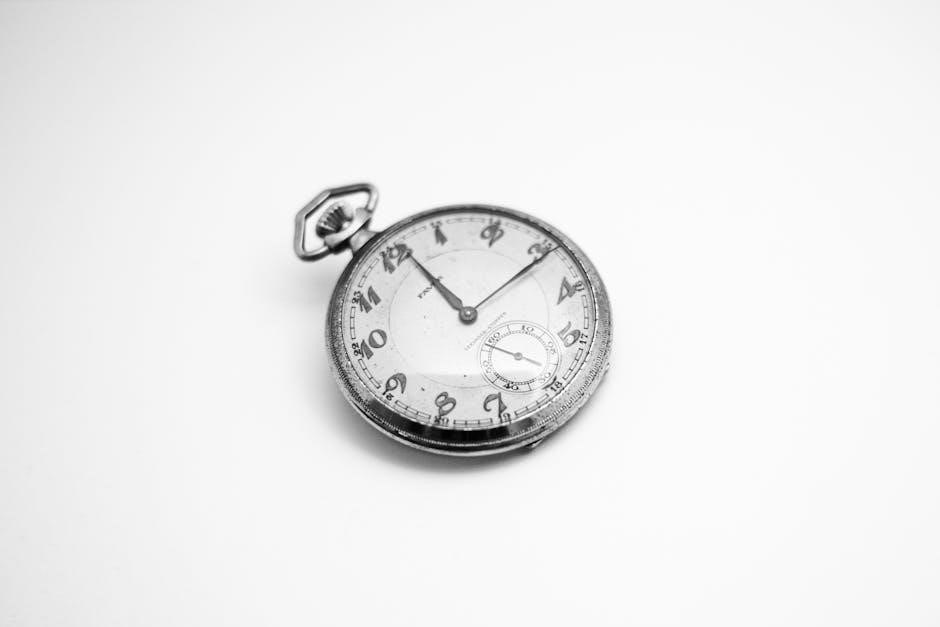
Timex’s manual watches represent a return to classic horology, blending traditional craftsmanship with accessible pricing, offering a unique user experience.
These timepieces, unlike their quartz or automatic counterparts, require deliberate winding, connecting the wearer to the watch’s inner workings.
What Defines a “Manual” Timex Watch?
A manual Timex watch, at its core, is powered by a mechanical movement that necessitates regular, intentional winding by the user. Unlike automatic watches which wind themselves through wrist motion, or quartz watches powered by a battery, these timepieces rely entirely on the energy stored within a mainspring.
This mainspring is coiled tighter by turning the watch’s crown, and as it slowly unwinds, it releases power to drive the hands. The defining characteristic is this direct interaction – the wearer becomes an active participant in keeping the watch running. Typically, these models feature a transparent case back, allowing a glimpse of the intricate gears and springs at work, showcasing the beauty of mechanical engineering.
The Appeal of Mechanical Timex Watches
Mechanical Timex watches offer a unique allure in a world dominated by digital timekeeping. They represent a connection to watchmaking history, embodying a craftsmanship often lost in modern convenience. The ritual of daily winding fosters a mindful relationship with the timepiece, a deliberate act absent in battery-powered alternatives.
Beyond functionality, these watches are appreciated for their aesthetic qualities – the visible movement, the tactile feel of winding, and the classic designs. They provide a tangible sense of ownership and a conversation starter, appealing to enthusiasts seeking authenticity and a departure from disposable technology. It’s a return to a slower, more deliberate pace.

Understanding the Movement
Manual Timex watches utilize mechanical movements powered by a mainspring, meticulously assembled with gears and levers to accurately display the time.
The Core Components of a Manual Wind Movement
At the heart of a manual Timex watch lies a fascinating interplay of tiny, precisely engineered components. The mainspring, when wound, stores the energy that powers the watch. This energy is then regulated by the gear train, a series of interconnected gears that transmit power at a controlled rate.
Crucially, the balance wheel oscillates back and forth, governed by a hairspring, acting as the watch’s ‘heartbeat’ and regulating timekeeping. The escapement releases the gear train’s power in measured increments, driving the hands. A pallet fork interacts with the escape wheel, ensuring accurate time division. Finally, the jewels (synthetic rubies or sapphires) minimize friction within the movement, enhancing longevity and precision.
How Manual Winding Works
Manual winding is the act of storing energy in the mainspring, the power source of your Timex watch. Rotating the crown – typically located at the 3 o’clock position – winds the mainspring tighter, increasing its potential energy. This action isn’t simply turning; it’s compressing a coiled metal ribbon.
As you wind, you’ll feel resistance, indicating the mainspring is being tensioned. Continue winding until the resistance noticeably increases, signaling it’s nearing full power. Avoid forcing it beyond this point. The stored energy is then slowly released by the gear train, powering the watch’s functions. Consistent winding ensures reliable timekeeping, as a fully wound mainspring provides optimal performance.
Differences Between Manual and Automatic Movements
Manual Timex watches require deliberate winding by the user, storing energy with each crown rotation. Automatic movements, conversely, wind themselves using a rotor activated by wrist motion. This rotor spins with your movements, continuously tightening the mainspring – eliminating the need for manual intervention.
Manual watches offer a direct connection to the watch’s operation, fostering a ritualistic experience. Automatic watches prioritize convenience, maintaining power as long as worn regularly. Manual movements generally exhibit simpler construction, potentially enhancing reliability; However, automatic movements offer the benefit of continuous operation when worn, while manual watches stop when unwound.
Setting the Time
Precisely setting the time on your manual Timex involves locating the crown, gently pulling it out, and rotating it to achieve the desired hour and minute.
Locating the Crown
The crown is the most prominent external feature used for operating a manual Timex watch; it’s typically situated at the 3 o’clock position on the watch case’s side. However, some vintage or uniquely designed models might feature a crown positioned at 2, 4, or even 10 o’clock.
Visually, the crown appears as a small, textured knob. It’s designed to be gripped and manipulated to wind the watch and set the time. Observe your Timex closely – the crown usually has a knurled edge for better grip.
Before attempting to wind or set the time, ensure you can clearly identify the crown. It’s crucial for proper operation and avoiding accidental damage to the watch’s delicate internal mechanisms.
Winding the Crown for Time Setting
Before setting the time on your manual Timex, gently pull the crown outwards. Most models have two positions: position zero (fully in) for winding, and position one (slightly out) for time setting. Ensure the crown isn’t forced; a smooth pull is essential.
Once in the time-setting position, rotate the crown – either clockwise or counter-clockwise – to move the hour and minute hands. Observe the watch face carefully to track the time adjustment. Avoid quick, jerky movements; a deliberate pace ensures accuracy.
Remember to synchronize the date (if applicable) alongside the time. After setting, push the crown fully back in to resume normal operation.
Setting the Time – Step-by-Step Guide
First, gently pull the crown out to the time-setting position – usually one click outwards. Rotate the crown clockwise to advance the hour and minute hands. Observe the watch face, ensuring you’re setting the correct time of day.
Next, if your Timex features a date function, adjust it by continuing to rotate the crown, typically between 9 PM and 3 AM. Avoid changing the date during these hours to prevent damage. Once the correct time and date are set, carefully push the crown back into its original position.
Finally, give the crown a slight turn to ensure it’s fully seated.

Winding Your Timex Watch
Regular winding is crucial for maintaining power in manual Timex watches, ensuring consistent and accurate timekeeping through consistent energy delivery.
How Often to Wind
Determining the winding frequency for your manual Timex watch depends on its power reserve – the duration it runs on a full wind. Most manual Timex models offer a power reserve of approximately 40-48 hours. Therefore, daily winding is generally recommended for consistent performance.
If you wear your watch daily, winding it at the same time each day establishes a routine. However, if you don’t wear it every day, wind it before each use to ensure it’s running accurately. A consistent winding schedule prevents the watch from stopping and needing resetting. Ignoring this can lead to inaccuracies and potentially affect the long-term health of the movement.
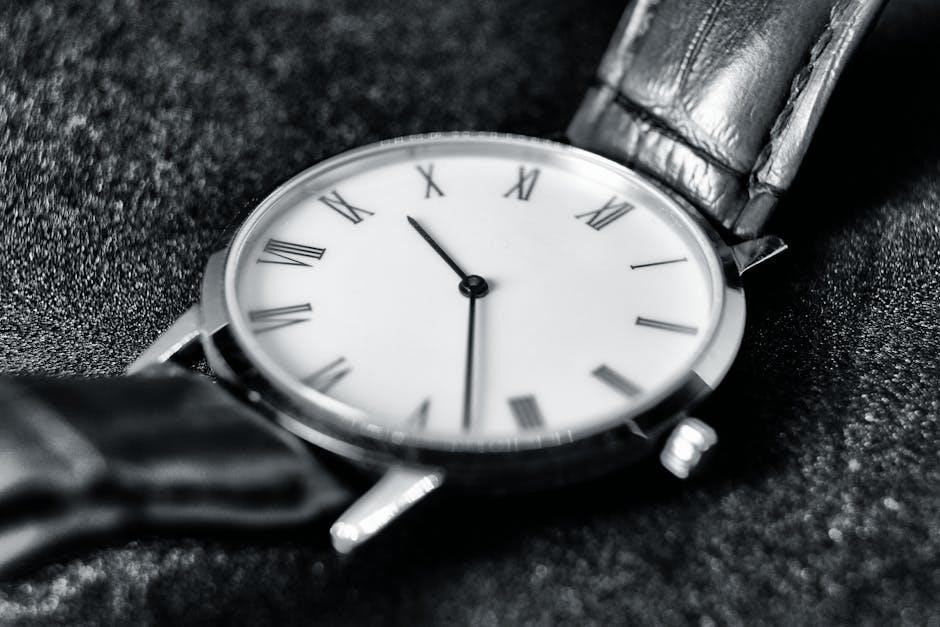
Pay attention to your watch; if it stops between windings, increase the frequency. Consistent winding is key to enjoying your Timex’s mechanical heart!
Proper Winding Technique
To wind your manual Timex watch, locate the crown – typically at the 3 o’clock position. Gently pull the crown outwards, if necessary, to the winding position (usually the first click). Begin winding the crown clockwise, applying gentle, consistent pressure. Avoid forcing it; if you feel resistance, stop.
A smooth, controlled rotation is preferable to rapid, jerky movements. You should feel a slight resistance as the mainspring tightens. Continue winding until the resistance increases noticeably, indicating the mainspring is fully wound. Approximately 30-40 rotations are usually sufficient, but avoid exceeding this to prevent overwinding.
Push the crown back in to its original position once winding is complete. Proper technique ensures efficient energy transfer and protects the delicate internal mechanism.
Avoiding Overwinding
Overwinding a manual Timex watch, though less common with modern movements, can still cause damage to the mainspring. You’ll notice increasing resistance as you wind; stop when it feels significantly firmer, but before forcing it.
Modern Timex manual watches often incorporate a slipping clutch mechanism, preventing catastrophic damage from excessive winding. However, repeatedly overwinding can still strain the components and potentially affect accuracy.
If you’re unsure, err on the side of caution and wind fewer rotations. Consistent, gentle winding is always better than aggressive, forceful attempts. Remember, a fully wound watch typically provides around 40-48 hours of power reserve, so daily winding is often sufficient.

Care and Maintenance
Regular care ensures longevity; gently wipe your manual Timex with a soft cloth, avoiding harsh chemicals, to preserve its beauty and function.
Cleaning Your Timex Watch
Maintaining cleanliness is crucial for a manual Timex watch, extending its lifespan and preserving its aesthetic appeal. Begin by using a soft, lint-free cloth – microfiber is ideal – to gently wipe the case and crystal. Avoid abrasive materials that could cause scratches.
For tougher grime, slightly dampen the cloth with lukewarm water; never submerge the watch. Pay attention to the crevices around the crown and case back, where dirt can accumulate. If necessary, a very mild soap solution can be used, but ensure thorough rinsing and drying afterward.
Leather straps require special care. Clean them separately with a leather cleaner and conditioner to prevent drying and cracking. Metal bracelets can be cleaned with a soft brush and soapy water, ensuring all residue is removed. Regular, gentle cleaning will keep your Timex looking its best.
Storage Recommendations
Proper storage significantly impacts the longevity of your manual Timex watch. When not worn, store it in a cool, dry place, away from direct sunlight and extreme temperatures. A watch box or pouch is ideal, protecting it from dust, scratches, and potential impacts.
Avoid storing your watch near strong magnetic fields, as these can affect the movement’s accuracy. If you have multiple watches, store them separately to prevent them from bumping against each other. For long-term storage, it’s advisable to wind the watch occasionally – perhaps monthly – to keep the oils circulating within the movement.

This prevents them from settling and potentially causing issues. A consistent storage environment will ensure your Timex is ready to wear whenever you desire.
Servicing and Repairs
Regular servicing is crucial for maintaining the accuracy and functionality of your manual Timex watch. While robust, mechanical movements require periodic cleaning, lubrication, and adjustment by a qualified watchmaker. A full service is generally recommended every 3-5 years, depending on usage and environmental exposure.
Attempting self-repairs can cause further damage; it’s best left to professionals. Look for a watchmaker experienced with mechanical movements. Common repairs include replacing worn parts, adjusting the balance wheel, and cleaning the escapement. Timex may offer authorized service centers, ensuring genuine parts and expertise.
Promptly address any issues to prevent minor problems from escalating into costly repairs, preserving your watch’s value and performance.
Common Issues and Troubleshooting
Manual Timex watches can occasionally stop running, exhibit winding difficulties, or show accuracy discrepancies; careful observation and gentle handling are key.
Watch Stops Running
If your manual Timex watch ceases to function, the most common cause is simply insufficient winding. Remember, these watches rely on your manual energy input to maintain power. Gently wind the crown, typically 30-40 turns, until you feel resistance – but do not force it.
If winding doesn’t revive the watch, check for any visible obstructions or debris around the crown or crystal. A very slow, deliberate winding motion can sometimes dislodge minor issues. If the problem persists, it could indicate a need for professional servicing, potentially involving cleaning and lubrication of the movement’s internal components. Ignoring a consistently stopping watch can lead to further complications and potentially more costly repairs down the line.
Difficulty Winding

Encountering resistance while winding your manual Timex watch isn’t always a cause for alarm, but persistent difficulty warrants attention. Ensure your grip is firm yet gentle, applying even pressure to the crown. Avoid excessive force, as this could damage the winding mechanism.
If the crown feels gritty or unusually stiff, it may indicate accumulated dust or dried lubricant within the movement. A professional cleaning and lubrication service is often the solution. Conversely, a completely “slipping” crown, offering no resistance, suggests a potential issue with the winding stem or internal gears, requiring immediate professional assessment to prevent further damage and restore proper functionality.
Accuracy Concerns
Manual Timex watches, being mechanical, aren’t as inherently precise as quartz movements. Expect a daily variation of several seconds, even with consistent winding and proper care. Factors like temperature, position, and the state of lubrication influence accuracy.
If your watch consistently gains or loses significant time – exceeding 30 seconds per day – it signals a need for regulation; A skilled watchmaker can adjust the balance spring to improve timekeeping. Remember, manual winding consistency is key; infrequent or incomplete winding directly impacts accuracy. Regular servicing ensures optimal performance and minimizes deviations over time.
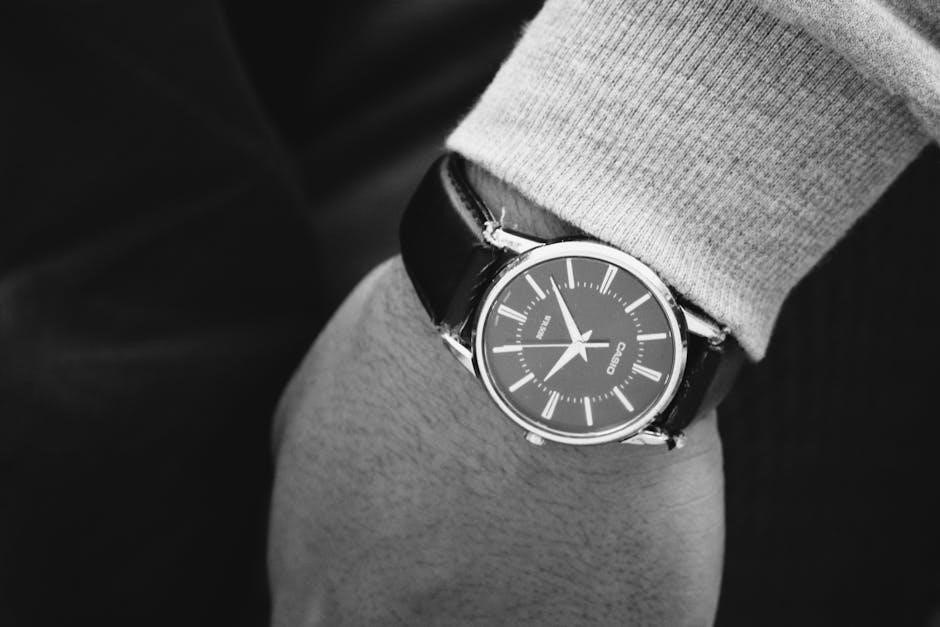
Timex Manual Watch Models – A Brief Overview
Timex offers both vintage-inspired and contemporary manual wind watches, appealing to diverse tastes and budgets, showcasing their commitment to mechanical timekeeping.
Popular Vintage Models
Timex’s historical catalog boasts several highly sought-after manual wind models, particularly from the mid-20th century. The Timex 800 series, known for its robust construction and reliable movement, frequently appears on collectors’ lists. These watches often featured distinctive dials and cases, reflecting the design aesthetics of their era;
Another notable example is the Timex Marlin, originally released in the 1960s, celebrated for its elegant, minimalist design and precise hand-wound movement. Recent re-issues of the Marlin have capitalized on this enduring appeal. Finding original vintage models in good condition can be challenging, but rewarding for enthusiasts seeking a piece of Timex history. Their simplicity and durability make them enduring classics.
Current Production Manual Timex Options
Timex has strategically reintroduced manual wind watches to its contemporary lineup, responding to growing demand for mechanical timepieces. The Timex Marlin Automatic and Manual collections represent the brand’s current commitment to this style. These modern Marlins retain the vintage-inspired aesthetic of the originals, offering a classic look with updated reliability.
Beyond the Marlin, Timex occasionally releases limited-edition manual wind models, often collaborating with designers or retailers. These releases frequently feature unique dial colors or case finishes. While the selection isn’t extensive, Timex provides accessible entry points into the world of manual wind watches, blending affordability with heritage-inspired design.